Peerzada Mahboob Ul Haq & Nasir Khuehami
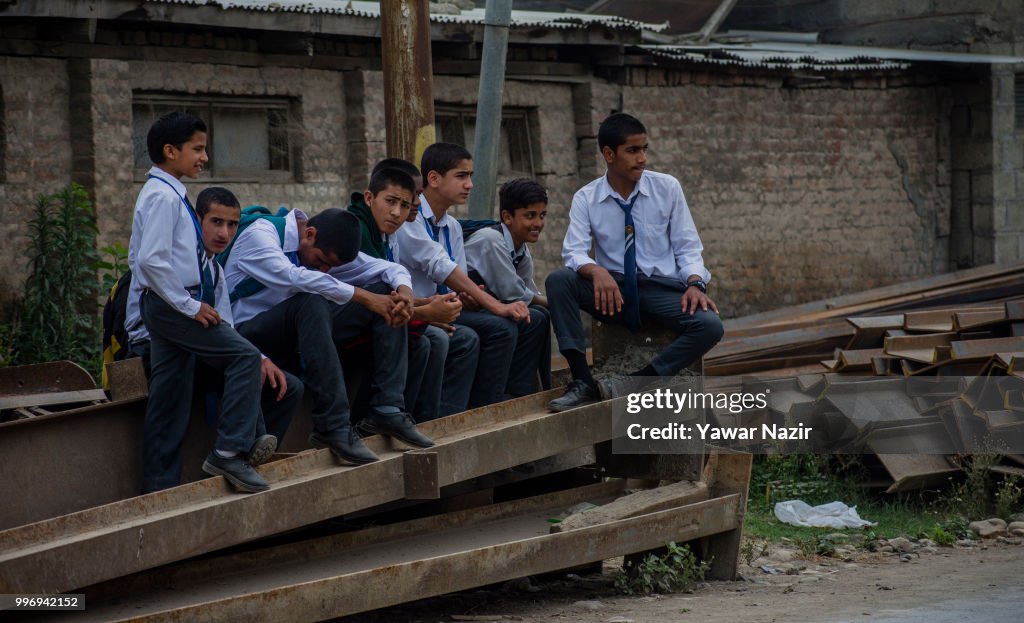
In December last year, students staged a protest in Srinagar led by Hon’ble MP Aga Ruhullah Mehdi, opposing what they described as a lopsided, unjust, and politically motivated reservation system. During that agitation, student representatives met the Chief Minister, Omar Abdullah, who reportedly assured them that the issue would be resolved within six months. Subsequently, an in-house sub-committee was constituted, and the elected Government of Jammu and Kashmir submitted its report to the Lieutenant Governor’s office for approval.
Fast forward to December 2025, there has been no official update or visible progress on the matter. With the issue remaining unresolved, students, again under the representation of Aga Ruhullah Mehdi, called for another sit-in protest, this time however, protest was directed towards the Lieutenant Governor’s office. Irony has a face; in Jammu and Kashmir, it has many. Unlike the protest in 2024, this time the protest was disallowed. Some student leaders were taken into custody, hostel wardens were instructed to prevent students from leaving their premises, and several political representatives espousing the cause of reservation were placed under house arrest. This raises an obvious yet an important question: why was the protest permitted last year but frowned upon this time? Was it because the earlier agitation was directed at the elected government, whereas this time it was around Lieutenant Governor’s office? One does wonder!
Adding to numerous contradiction that exist on ground; parallelly, protests were happening in Jammu, albeit on a different issue, opposition to the admission process of Shri Mata Vaishno Devi Medical College, with protestors demanding that admissions be restricted to a single religious community, essentially a communal protest, and was allowed to proceed. However, one wonders, why were protests thwarted in Kashmir. The pattern is difficult to ignore.
In an article published in The Indian Express on June 1, 2006, Ajit Doval argued, “The reservation issue is an expression of anger and frustration in some of India’s bright youth against what they perceive as denial of justice and equality. How many of us are brave enough to concede that what beleaguered Punjab, J&K, Northeast and now left-wing extremist areas was to some extent a consequence of divisive politics providing openings to our external adversaries? From a security point of view the reservation issue, particularly the way it has been handled, militates against India’s interest. It has to be substituted by the strategy of consolidation and integration of as many segments and interests groups as possible till one acquires the critical mass that gives legitimacy to rule”.
While this observation was made in a different context and addressed to a different audience, its underlying argument remains strikingly relevant to the contemporary discourse in Jammu and Kashmir, where demands for the rationalisation of the reservation system is the prime demand of protesters. Doval’s framing of reservation as not merely a social policy issue but one with tangible internal security implications resonates strongly with prevailing patterns of disaffection in the region. As such, these arguments warrant careful consideration, not only in principle, but in their practical application to governance and policy-making in J&K.
In a recent article published in The Indian Express, Ram Madhav argued that “there is zero appetite for terrorism and separatism in the Valley now. Delhi must seize this moment by enhancing direct engagement with various stakeholders in Jammu and Kashmir through political dialogue.” Those currently administering the affairs of J&K would do well to take note of this assessment. If, indeed, there is no appetite for terrorism or separatism, one must ask why peaceful protests were viewed with suspicion and met with coercive measures. In a flourishing democracy like India, peaceful protest is in as much integral part to the political process as deliberation within Parliament or state assemblies.
The erring students in Kashmir were primarily and merely seeking an open line of communication from CMs office and same communication from LGs office, if either or both on time had opened the communication lines, police action would not have been needed, but its Kashmir, the only thing straight here are poplars. What realistically, would have transpired had the protests been allowed? The LG could have engaged with the students, acknowledged their concerns, and offered assurances regarding timelines and intent. Such engagement would have rendered police action, house arrests, and detentions unnecessary. The situation escalated not because of disorder or suspicion, but because dialogue was absent. Unless, of course, the prevailing police–bureaucratic framework in J&K harbours an inherent discomfort with democratic expression.
This institutional suspicion does not remain confined to the geography of Kashmir or to the actions of the state alone. When democratic expression within Kashmir is repeatedly framed as a security concern rather than a civic right, it sends a wider social signal: that Kashmiri identity itself is presumptively suspect. Over time, this logic seeps beyond officialdom and is reproduced informally in society, where ordinary Kashmiris students, workers, and traders, are subjected to scrutiny, coercion, and performative tests of loyalty.
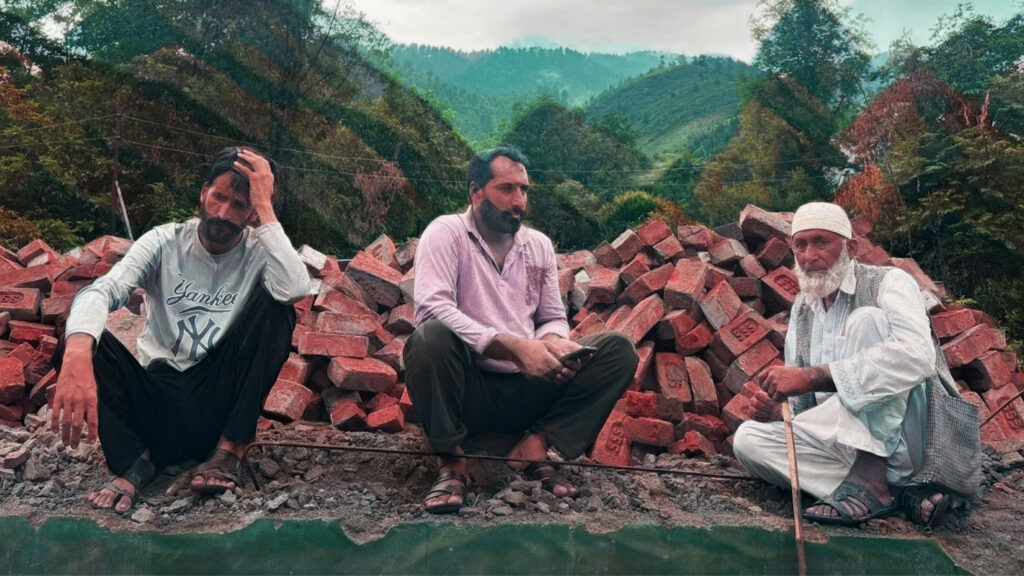
In past two weeks alone, multiple incidents have surfaced in which Kashmiri traders are reportedly being harassed, physically assaulted because of their identity. In one of the instances a Kashmiri trader is coerced into chanting “Bharat Mata ki Jai” while he keeps saying “Bharat Ki Jai,” affirming his allegiance to Bharat, a frenzied mob instead insists him to say “Bharat Mata Ki Jai,” which he is eventually forced to say. Even then, some object to how he says it. Clearly it appeared; it was never about patriotism, it points to a climate in which hate has been so routinised that it sustains itself.
We believe trade and education remain two of the most effective conduits for bridging disparate identities and geographies, while we see ideals of diversity are championed across, it doesn’t get reflected amidst these cries of Kashmiris, whether from students or traders, working or studying in different parts of country.
In pursuit to discipline or deter Kashmiris through undemocratic measures, the State risks behaving as sentient-being and an emotional actor. The State is, by default, an impersonal institution, expected to listen dispassionately, respond rationally, and act in accordance with its long-term interests rather than momentary impulses. The democratic habits that India has consciously cultivated among its citizens therefore deserve a corresponding degree of respect and institutional immunity. To push the state apparatus into modes of retribution or emotional reaction is both conceptually flawed and politically counterproductive.
If India is to consolidate rather than merely control, it must recognise that dignity is indivisible. A young Kashmiri student or trader cannot be expected to internalise democratic faith when the institutions meant to protect it hesitate to listen, and society feels entitled to intimidate. And if the issue of reservation is addressed with sincerity and resolution, a significant source of youth disaffection in Kashmir is likely to dissipate. For many young Kashmiris, broader political questions such as statehood, Article 370, or autonomy can afford to wait, and will inevitably remain within the remit of established political actors. The more immediate concern for the youth is dignity, opportunity, and a secure future. Resolving such grievances would allow them to redirect their energies toward education, skill development, and livelihood, replacing alienation with constructive engagement, dystopia with trust and imagined nationhood into lived reality.
Peerzada Mahboob Ul Haq is a young political activist and Advisor to the Jammu and Kashmir Students Association. He can be reached at smhaq38@gmail.com and on X @mahboobulhaq99.
Nasir Khuehami is a political commentator, Research scholar at Jamia Millia Islamia, and the National Convenor of the Jammu and Kashmir Students Association. He can be reached on X at @nasirkhuehami.